

- How can I rapidly create and test agentic applications?
- How can I distribute my agent to mediums like voice, Slack, Telegram Bot, and email in one unified interface?
- How can I deploy agents to production, scale and observe them, and handle versioning?
- How can I manage access control and permissions across different agents and users?
- How can I easily integrate with agentic services like MCPs, LLMs, and other tools?
Key Benefits
Reach More Networks with One Identity
Distribution Ions map one Aion Identity onto external networks without requiring a separate application for every channel. Each Distribution connects network ingress to an Ion Sequence while preserving the same application address.


- Aion normalizes communication to A2A, so direct calls, agent-to-agent hops, and external ingress can share the same request model.
- Distribution endpoints securely bridge an Aion to external networks and systems without requiring a separate integration layer in every agent implementation.
- Distributions support more than social channels. Use them to expose A2A endpoints for agent-native messaging or connect an Aion to other supported networks and systems. These endpoints can share one Aion Identity and permission model for controlling access between the application and the outside world.
Tooling for Everyone on Your Team
Aion is not just a runtime. It comes with different operating surfaces for developers, operators, and non-technical teammates.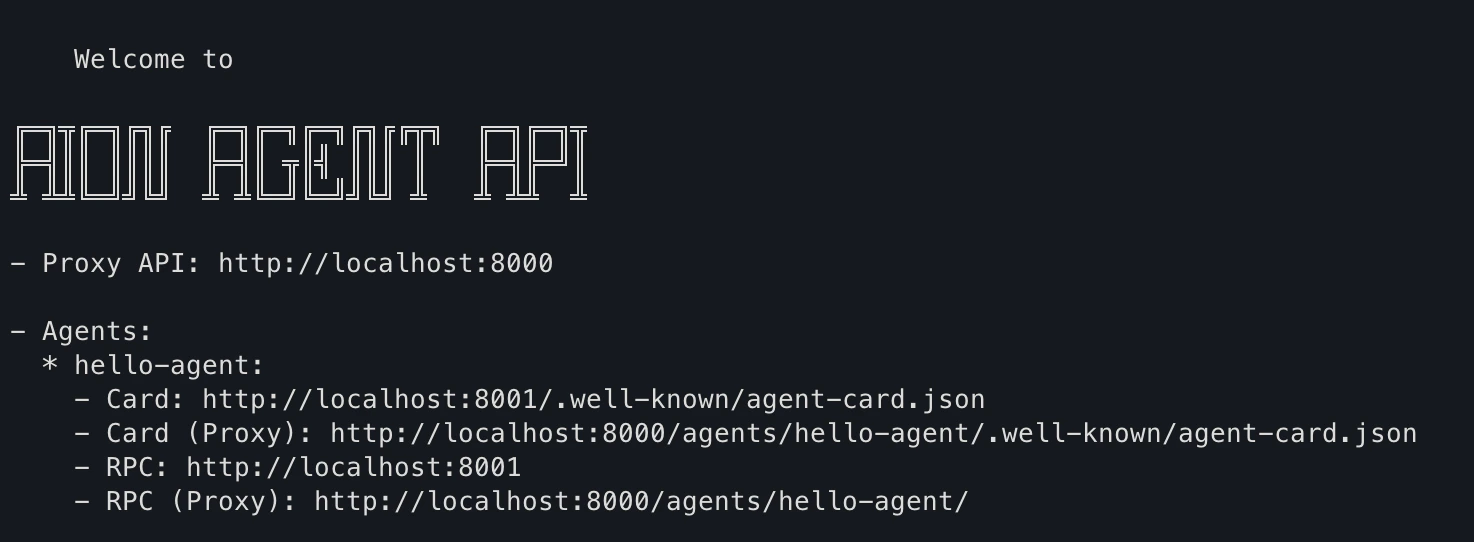
- Developers can run the open-source Aion server locally with
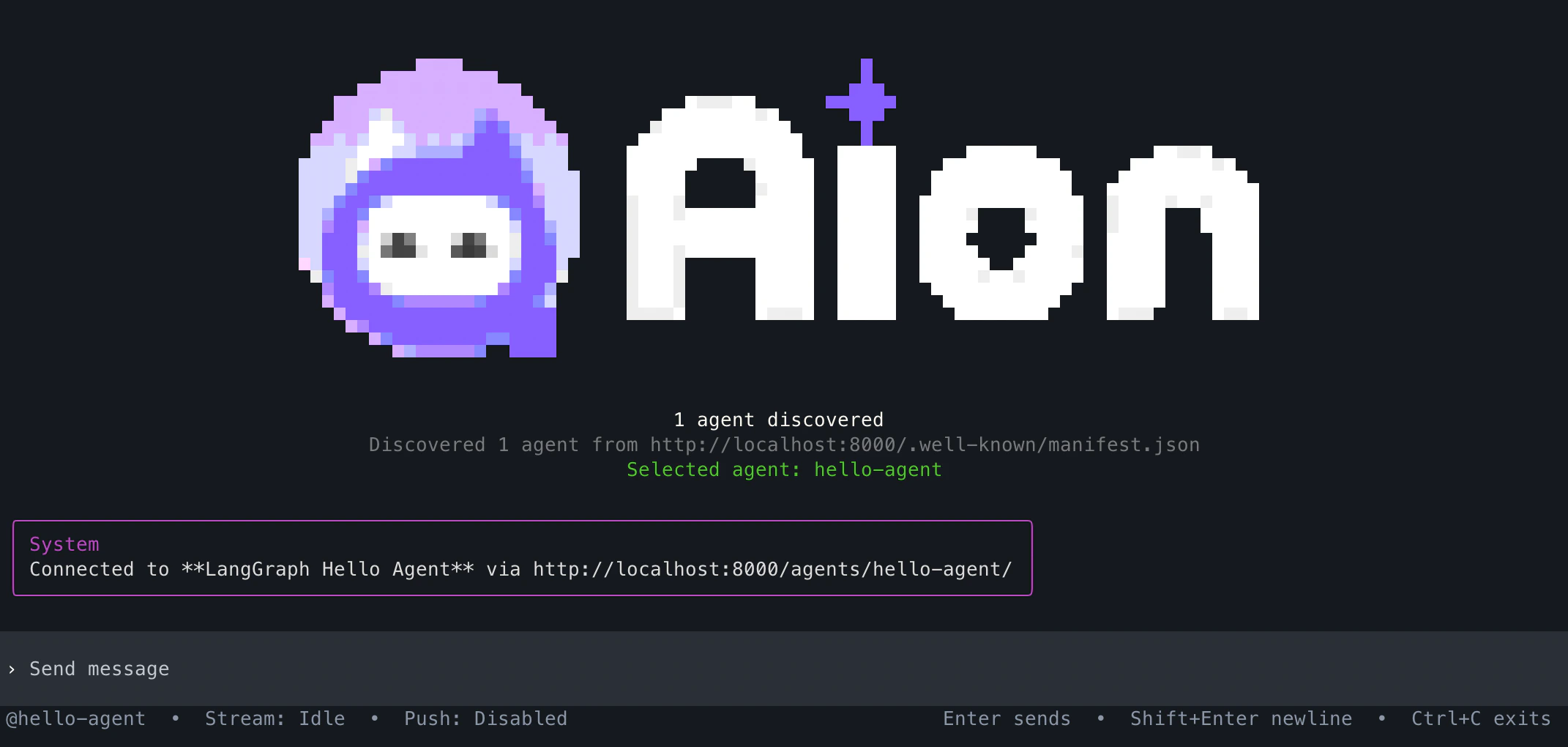
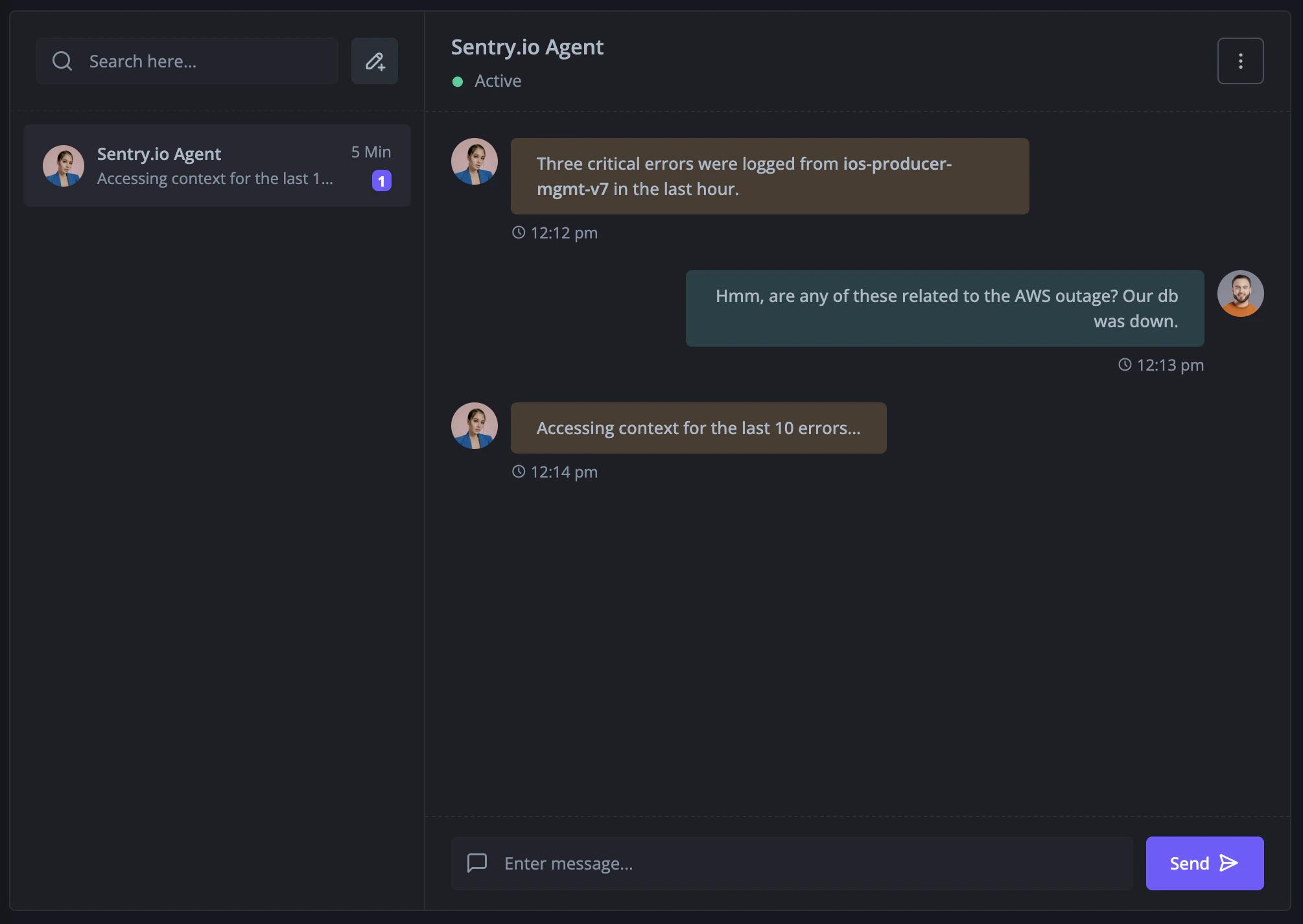
aion serve, expose multiple agents behind one proxy, and interact with them from the command line usingaion chat. - The control plane gives teams a browser-based environment for working with projects and communicating with agents without requiring everyone to work from local source code.
- Because these interfaces all sit on the same integrated agent model, teams don’t need separate platforms for development, operations, and end-user access.
Framework Freedom
Choose your own agent orchestration framework. The Aion open-source server and network harness follow idiomatic IO patterns for each supported framework so that your implementations won’t require external dependencies. For example, in LangGraph, you can simply receive a HumanMessage and respond with an AIMessage through your graph state’s messages property. The harness does the rest. And if you want more sophistication, our framework-specific SDKs provide additional features and capabilities.

- The Python SDK supports LangGraph and ADK today, and the broader platform is designed around agents that expose A2A rather than agents rewritten into a proprietary runtime.
- The
aion.yamlconfiguration allows you to register agents and optionally proxy a local MCP server without forcing your application logic into a new architecture. - That separation keeps agent implementation independent from network infrastructure, so you can evolve frameworks and packaging choices without rebuilding the whole application shell.
Operate Agentic Applications at Scale
As an agentic application grows, its parts change at different rates. Teams add networks, update behavior, promote deployments, and adjust identities and permissions. Coordinating those changes becomes an application-operations problem, not just a model or token-management problem. Aion brings those concerns into one control plane, so each part can evolve without changing the application’s stable Identity or rebuilding its network integrations.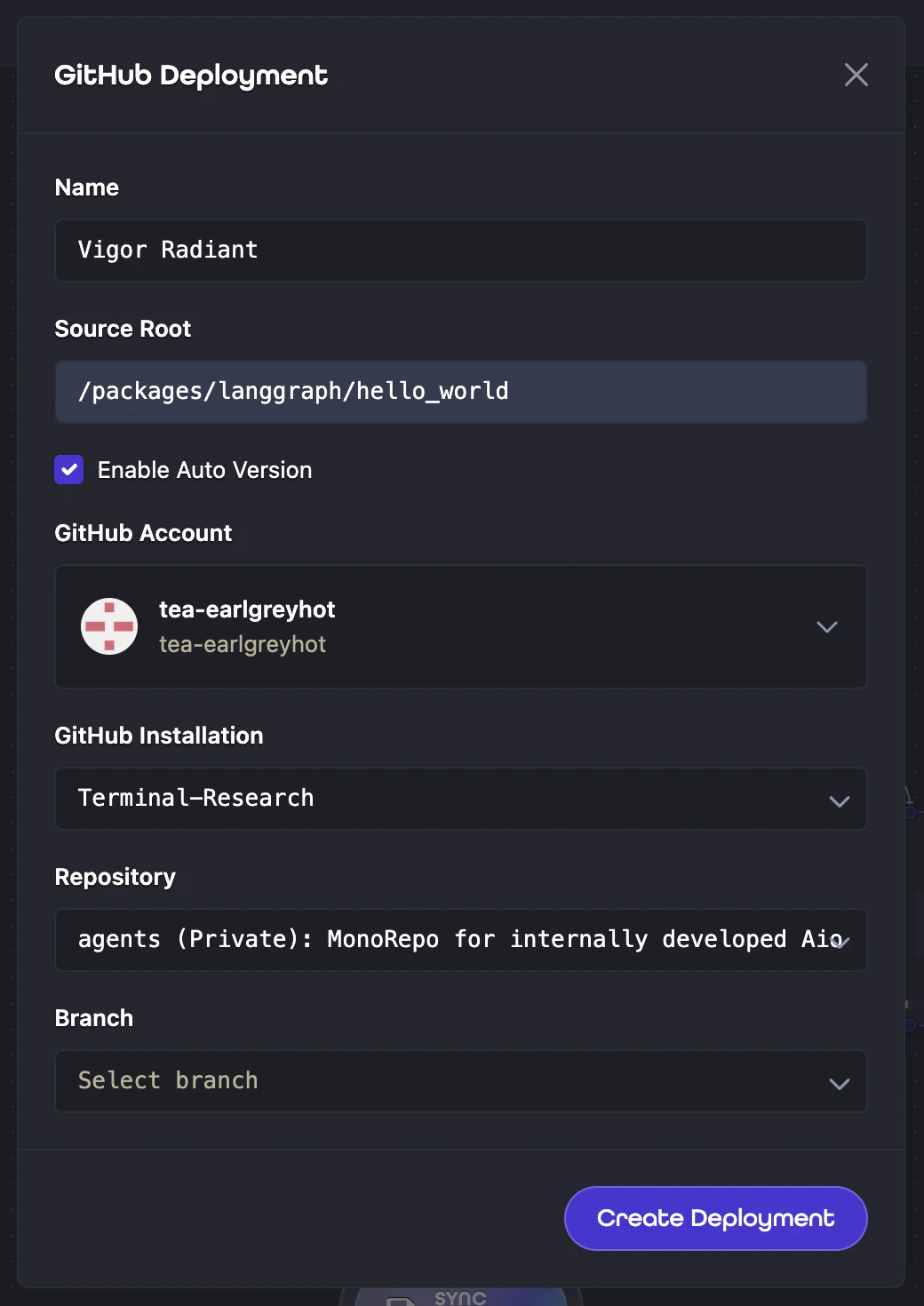
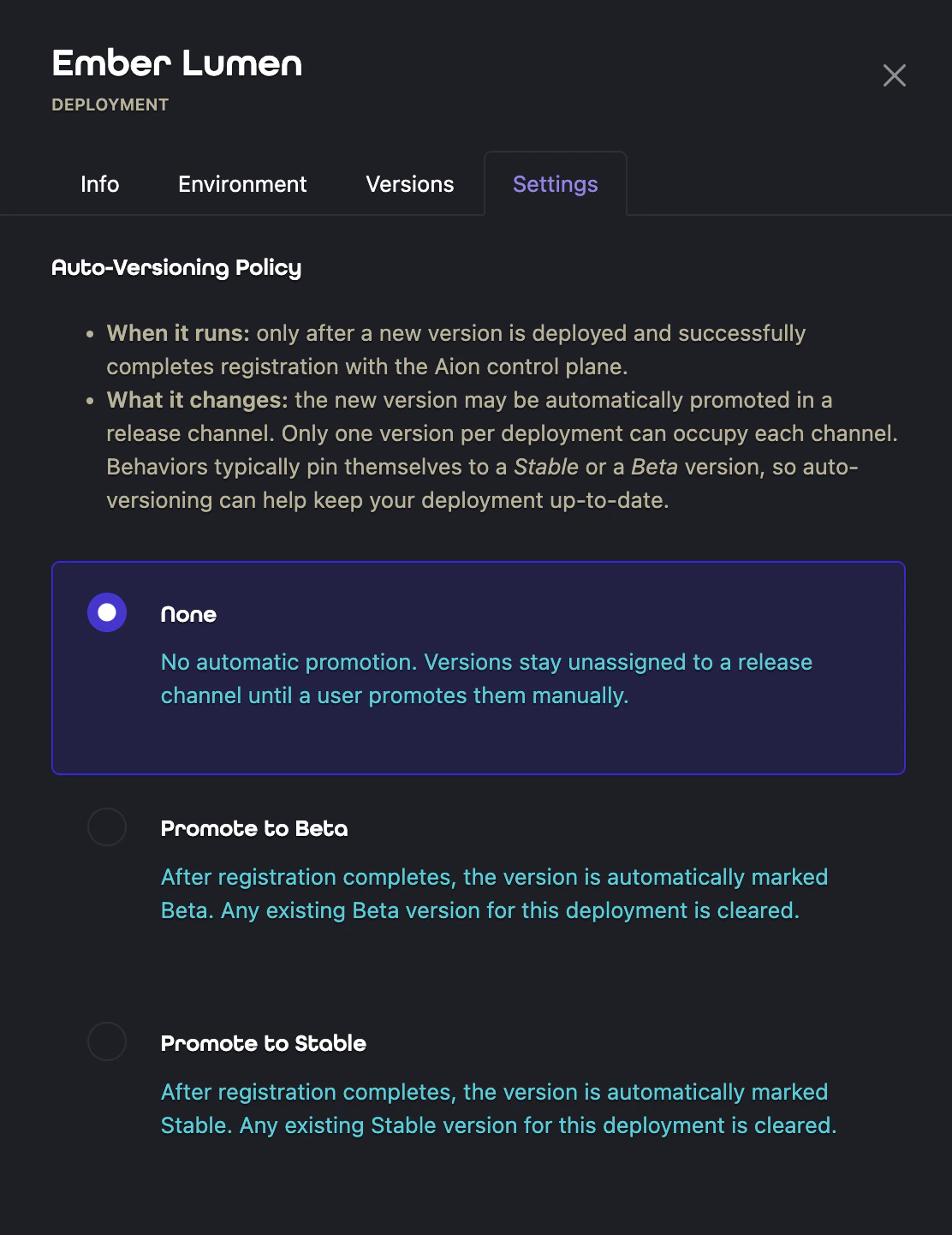
- Deploy implementations from GitHub and promote versions through release channels.
- Keep each Aion’s Identity stable as its Ions, Sequences, and network mappings change.
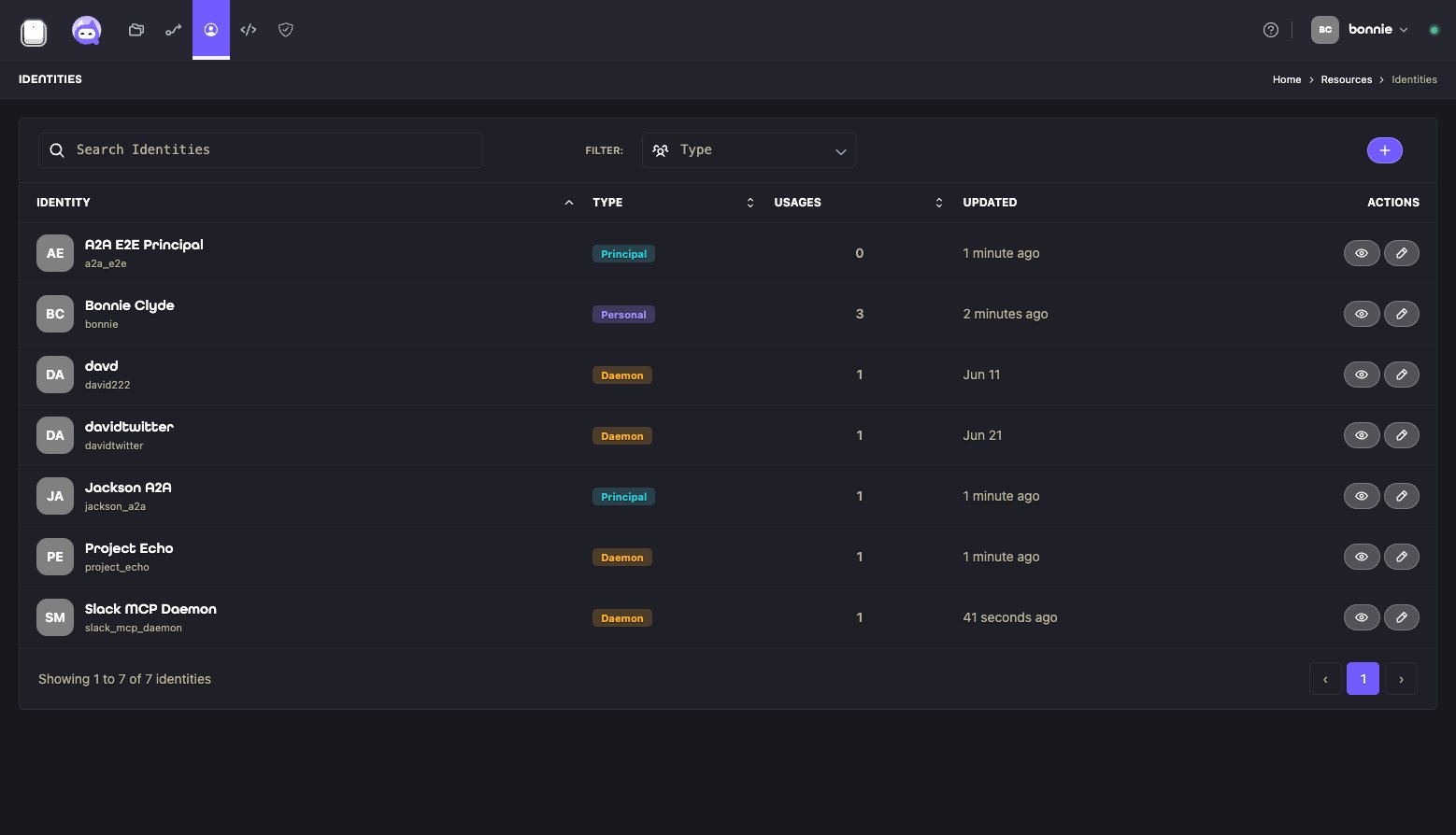
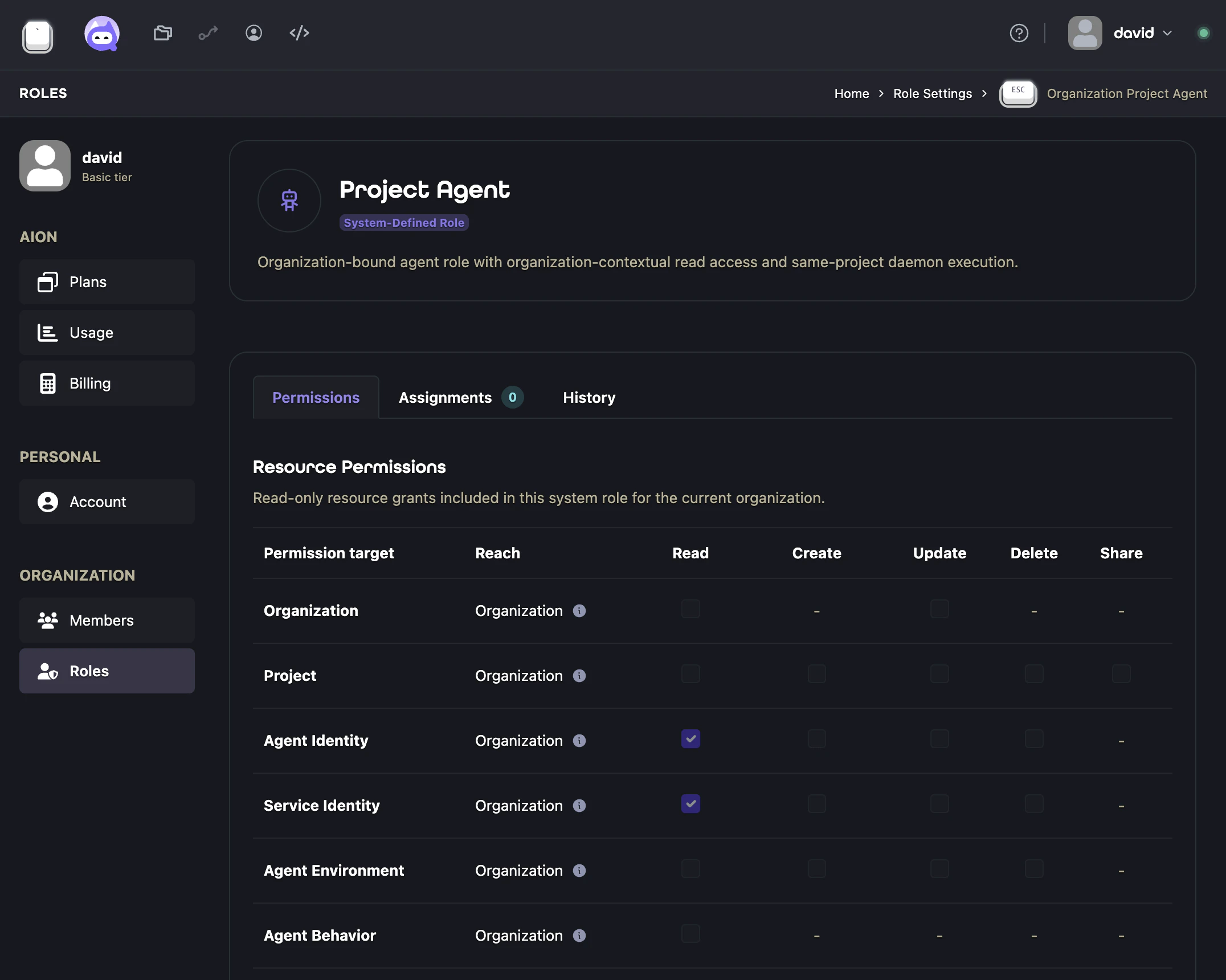
- Control access with shared permissions, discovery rules, and capability policies.
Expansive Model Routing
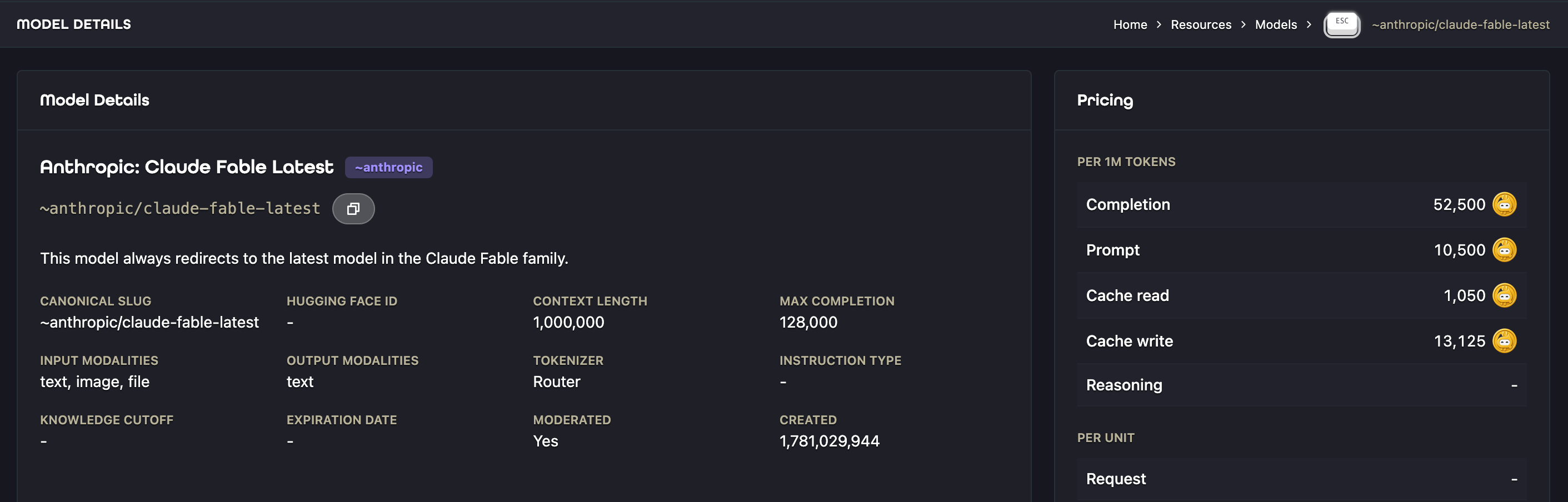
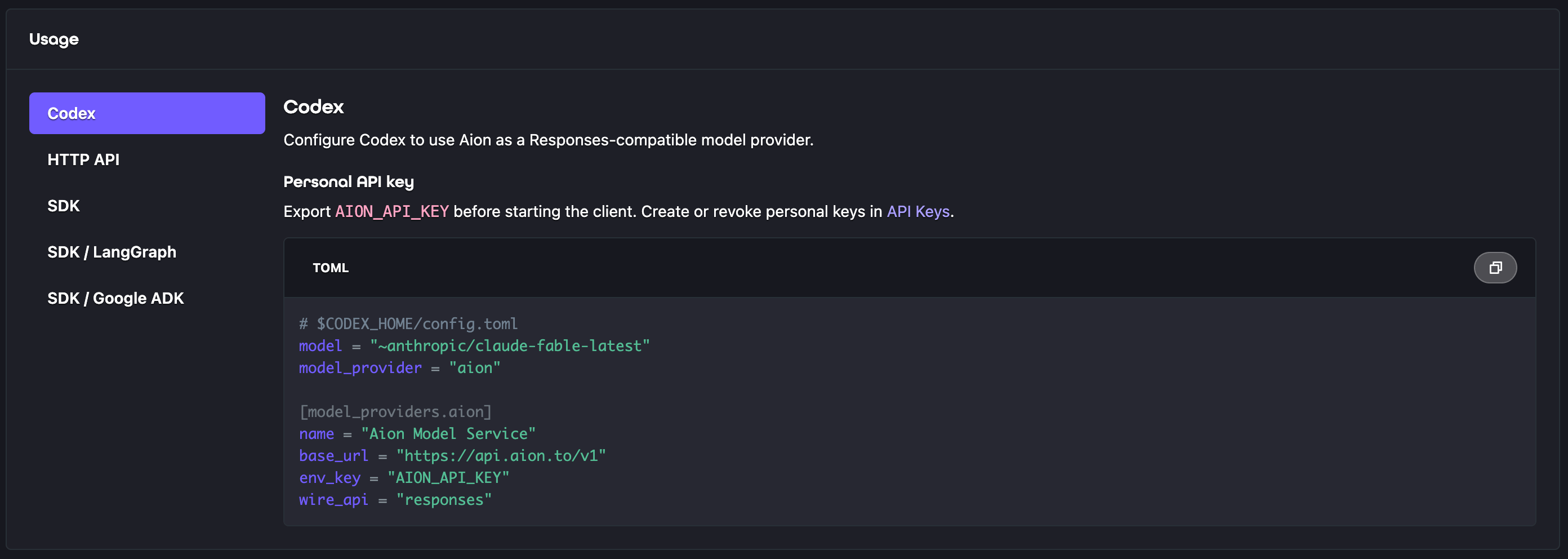
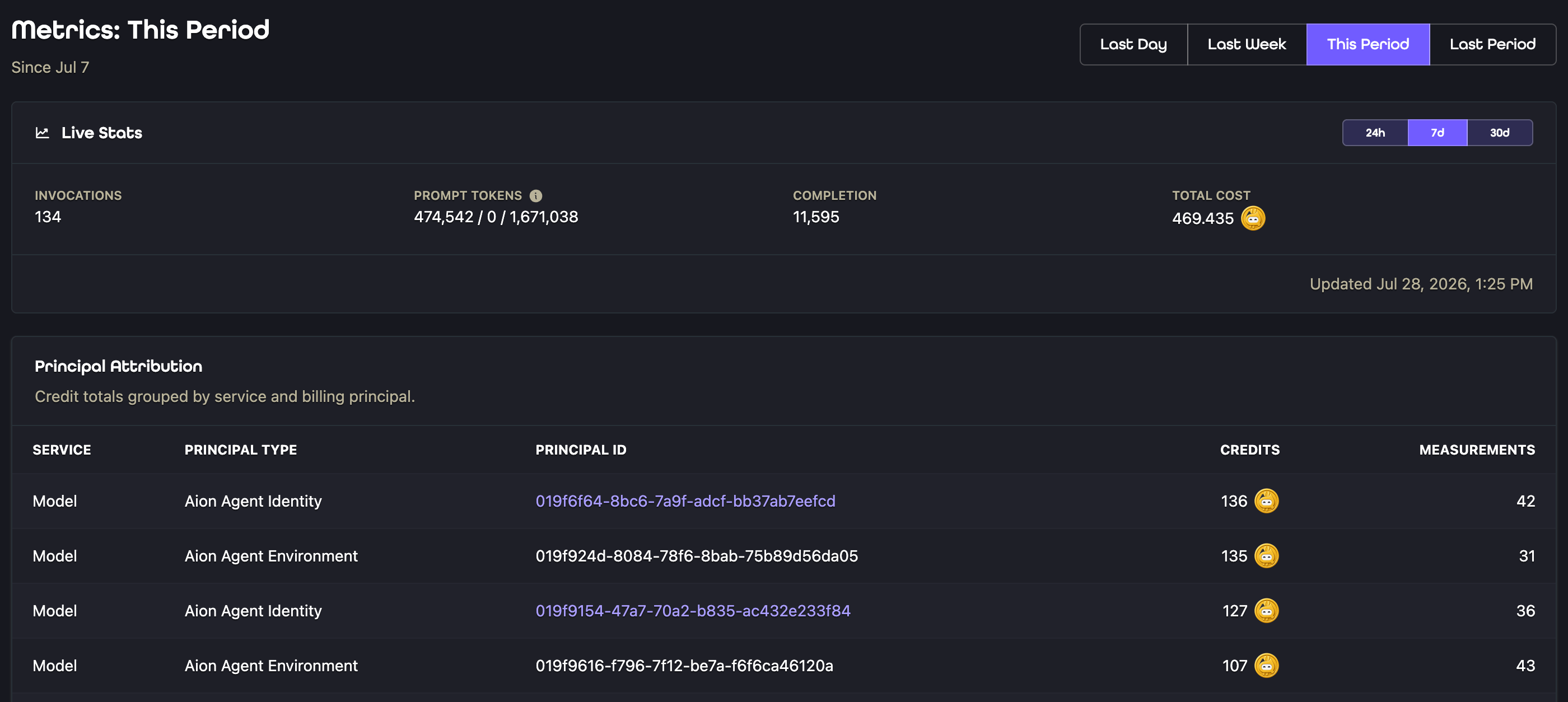
Aion’s Model Service routes requests to more than 300 models through one control-plane interface. Use Aion SDKs to integrate those models into your agents without maintaining a separate integration for every model provider. From the same control plane, you can observe token utilization and caching efficiency, compare model usage, and apply access controls and usage limits. This keeps model operations centralized while allowing each agent to use the model best suited to its work.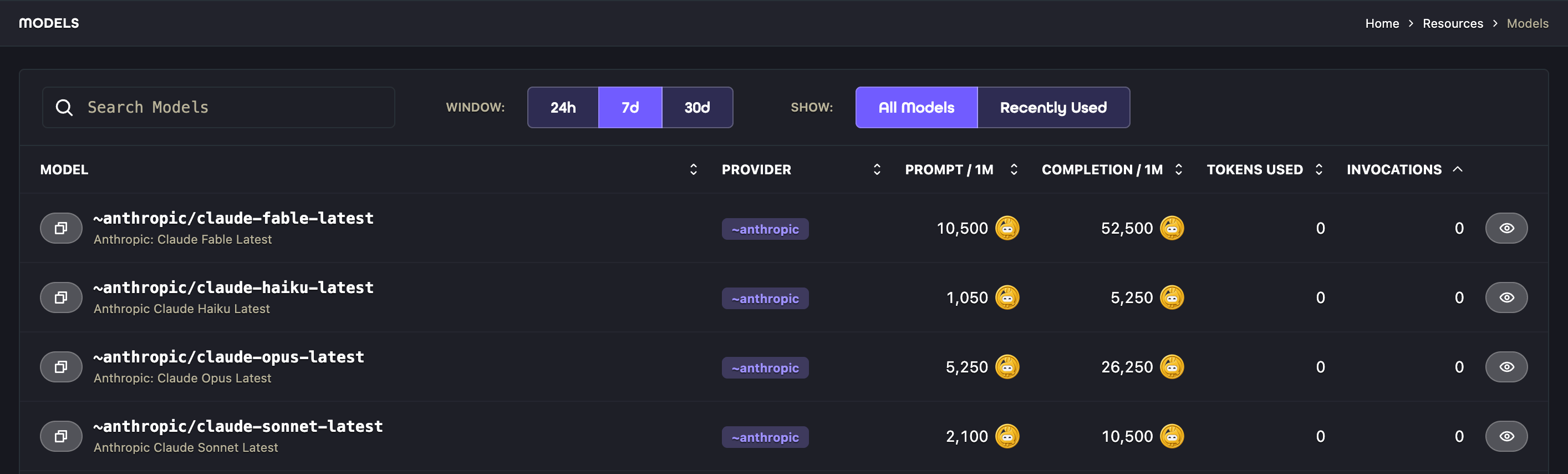
Endless MCP Tools
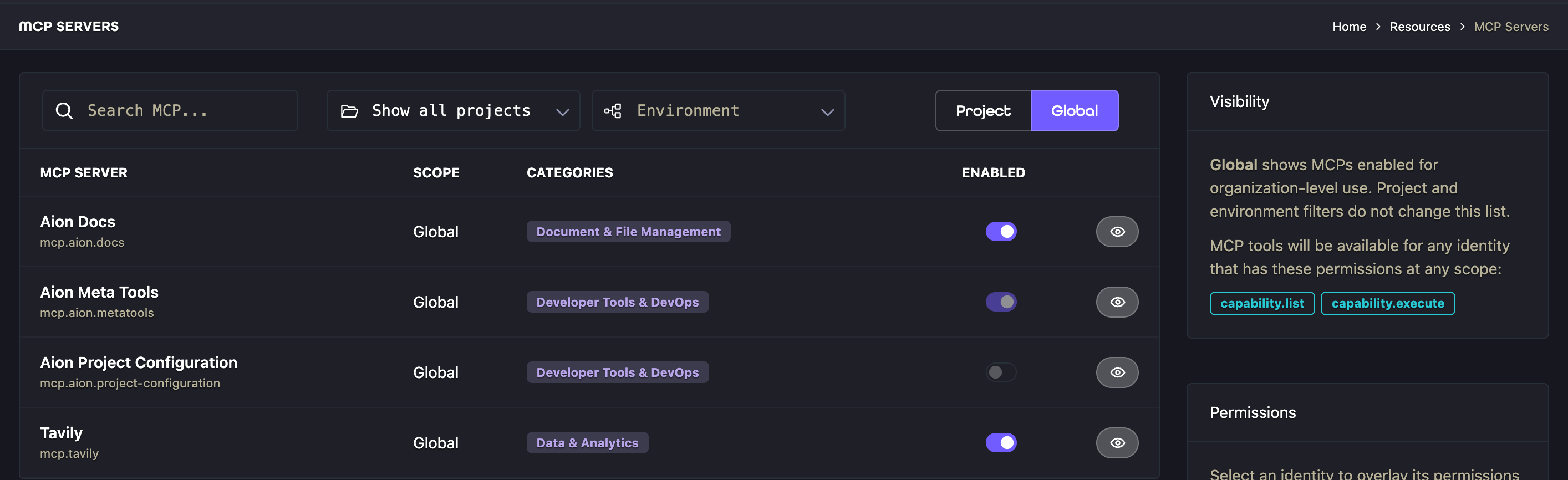
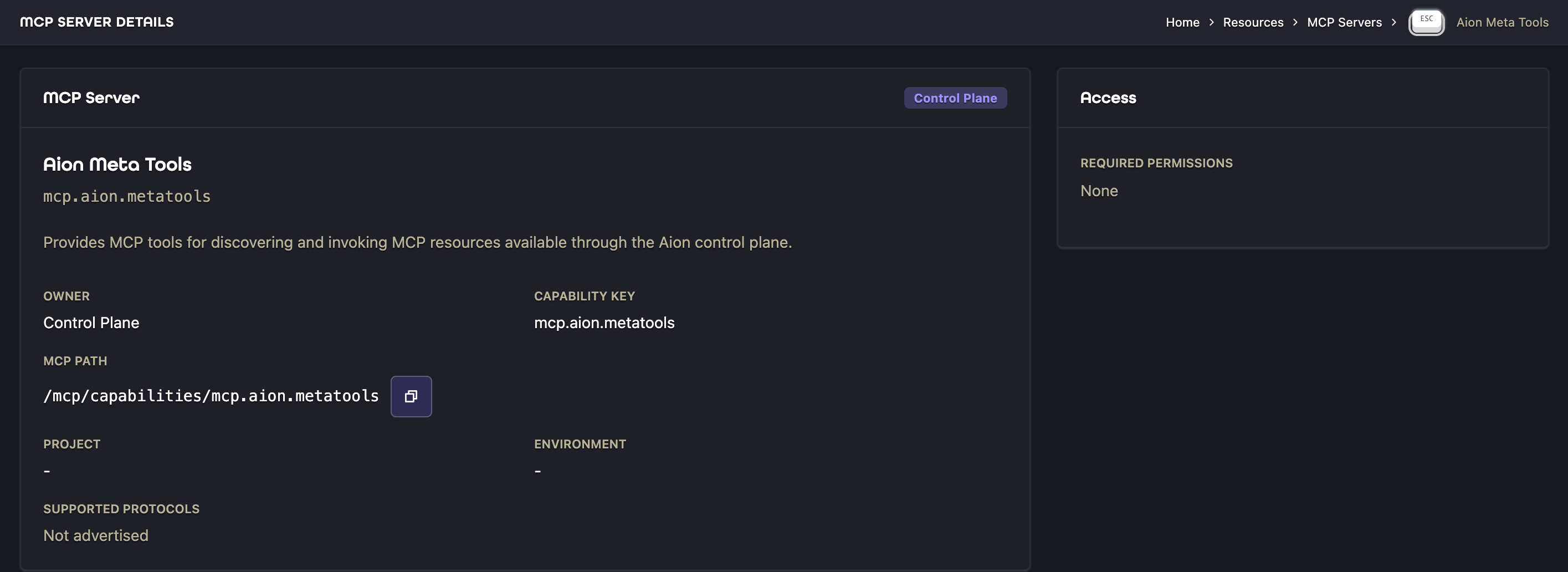
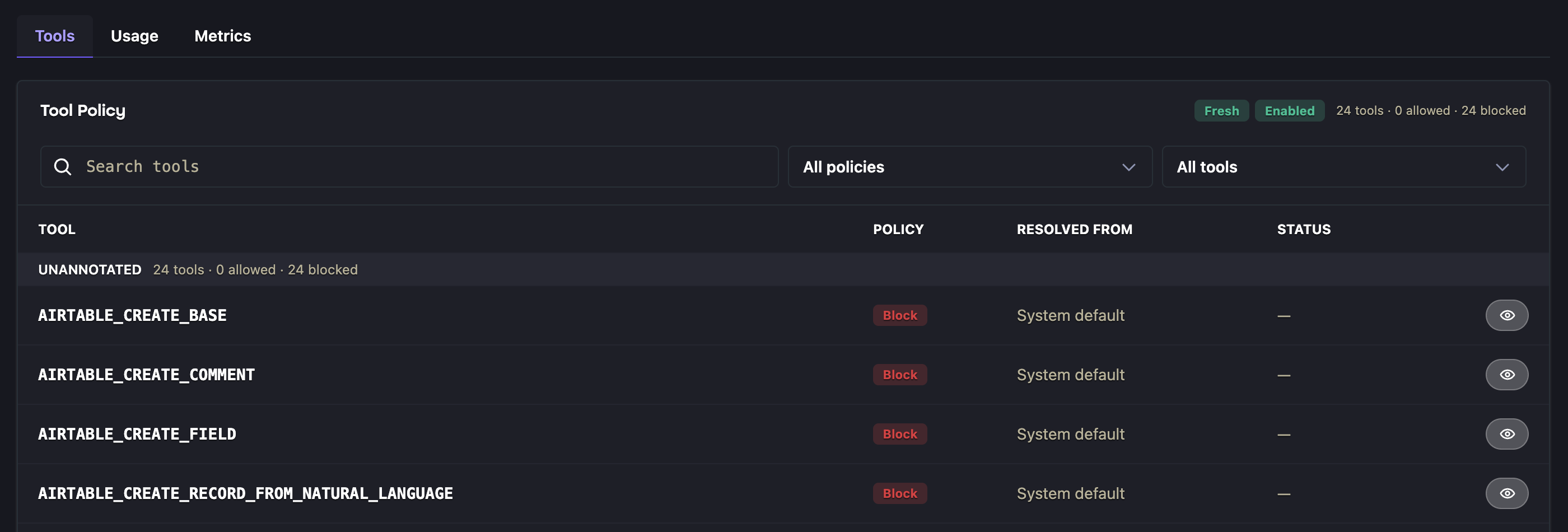
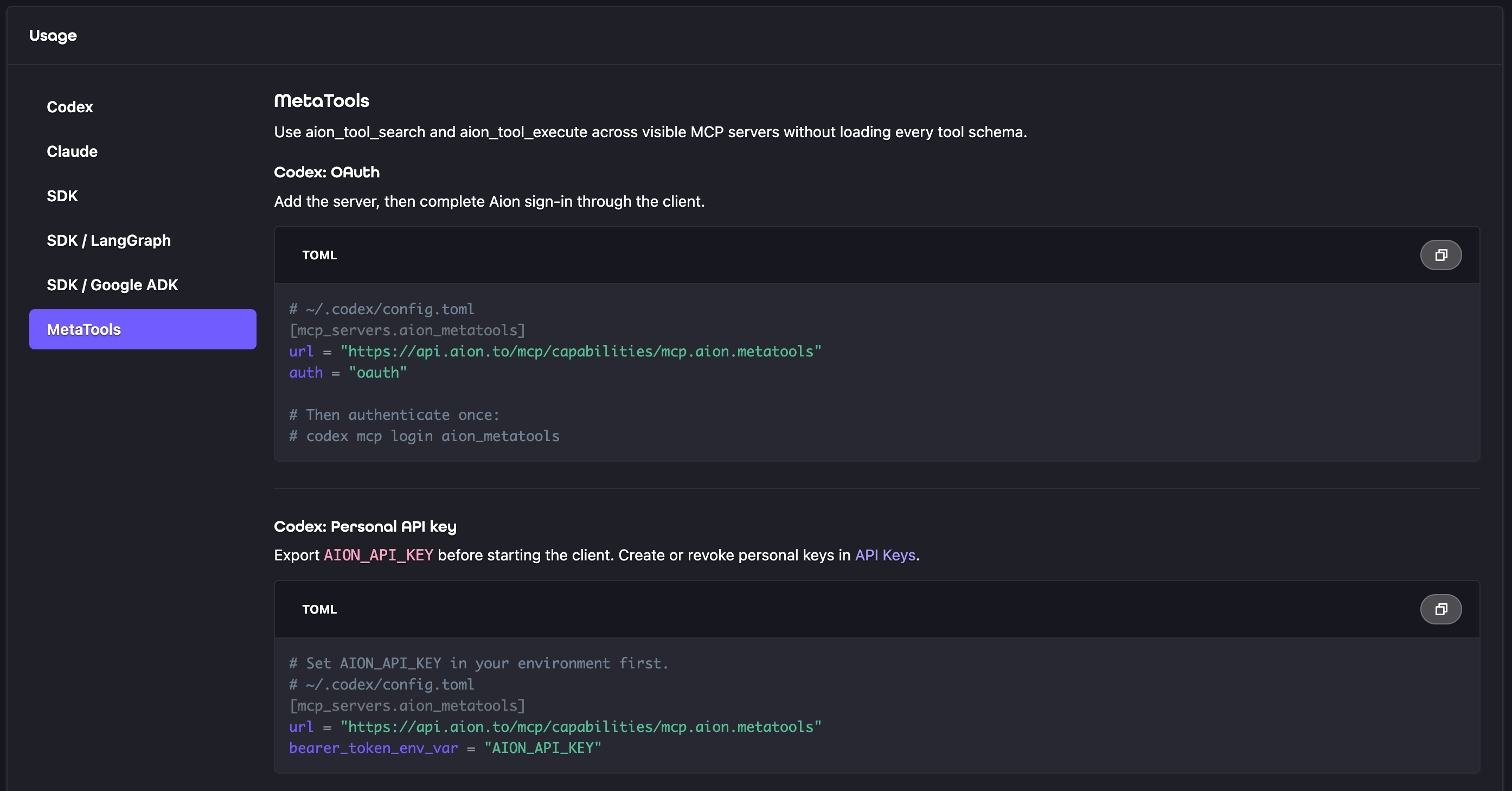
Aion supports thousands of MCP tools across hundreds of services out of the box. Instead of building custom tool adapters, add an MCP-capable Behavior Ion in Composer and make its tools available to authorized agents. For supported services, you can select an MCP endpoint, connect any required account, configure its capabilities, and sync the Project in less than a minute. This makes it easy to add new tools to an agent without changing the agent’s core implementation. Aion Meta Tools compresses access to more than 5,000 tools behind two stable interfaces:aion_tool_search discovers tools available to the agent, and aion_tool_execute invokes the selected tool. Search
results are filtered by the agent’s Identity and permissions.
The agent loads the two Meta Tool definitions instead of placing thousands of individual tool schemas in its context
window. It can then discover and execute the right tool only when needed, dramatically reducing tool-related token
usage while preserving access to the full authorized catalog.
Compose Applications from Ions
Each Ion gives one part of an application a clear job. Distribution Ions connect the application to networks, Behavior Ions determine what happens when work arrives, and Deployment Ions provide the runnable implementations. Connecting them forms reusable Sequences without forcing every concern into one agent implementation. Here, the Slack and A2A Distribution Ions anchor separate Sequences that reuse the same Policy and Support Behavior Ions. The Deployment Ion supplies the live implementation behind that shared application logic. Because these responsibilities stay separate, you can:- add a Distribution Ion for another network without duplicating application behavior
- reuse a Behavior Ion across several Sequences
- update a Deployment Ion without redesigning the application’s network entrypoints
When Aion May Be Overkill
Aion is probably not the right first choice if:- You only need a single standalone chatbot or assistant with no multi-agent topology.
- Your application does not need inter-agent communication, discovery, or network bridging.
- You don’t plan to deploy large numbers of agents or distribute them widely within or outside of your organization.
- A simple request-response API plus a task queue already solves the whole problem cleanly.