Projects organize work; Identities define Aions
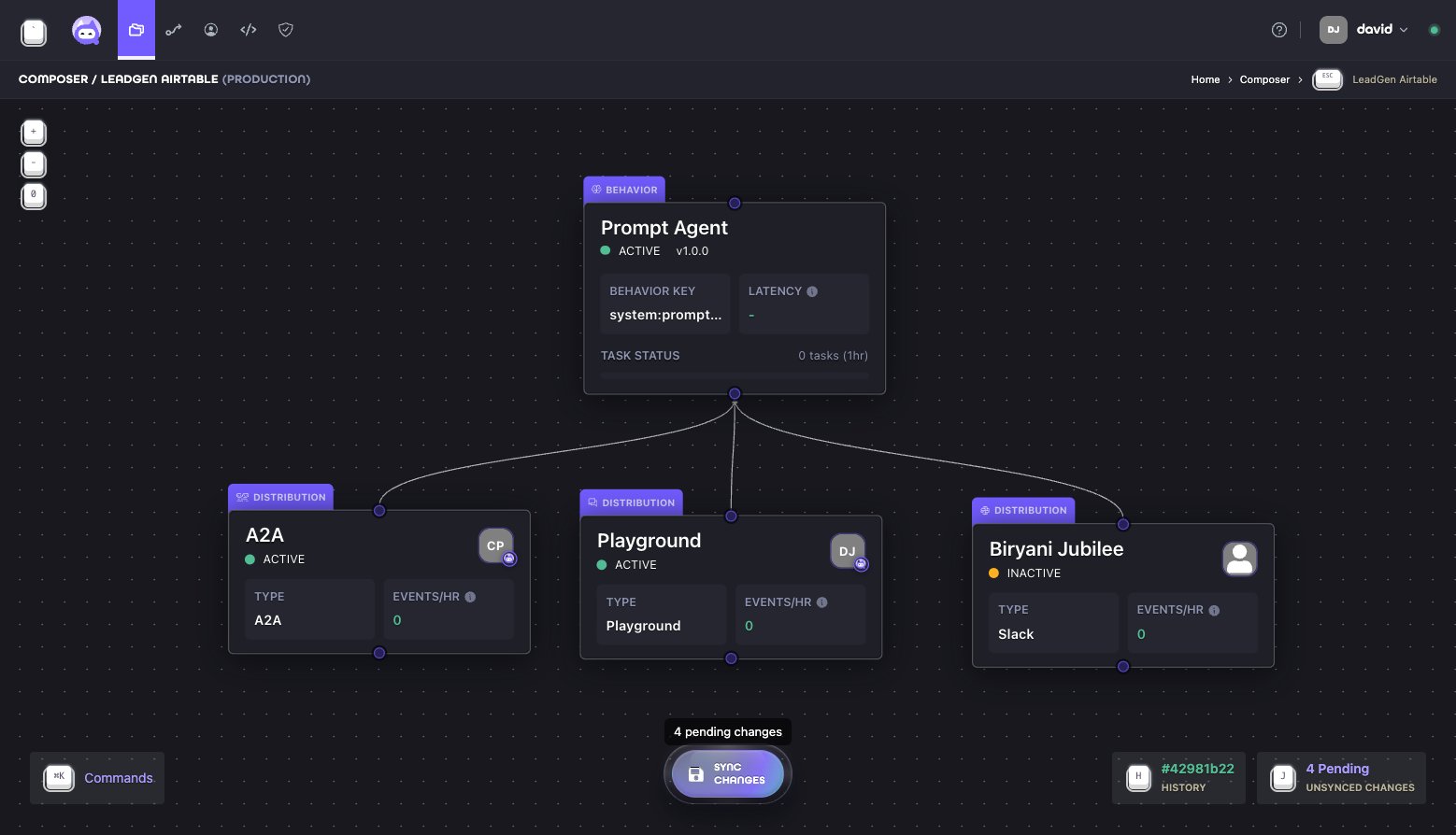
Composer edits one Project environment at a time. These concepts describe different boundaries:
A Project is not an Aion. One Project can contain Ions serving several Aions, and one Aion can use
Distribution Ions and Sequences assembled in more than one Project.
Composer edits and syncs each Project separately. The shared
@support Identity makes the Telegram Bot, X, and Voice
Distribution Ions surfaces of the same Aion across both Project graphs. Read
Identities for how a principal Identity defines that application
boundary.
A Typical Composer Workflow
Changes remain pending in Composer until you sync them. Work through the graph in this order so you can review the complete runtime flow before saving it.1. Create or select a Project
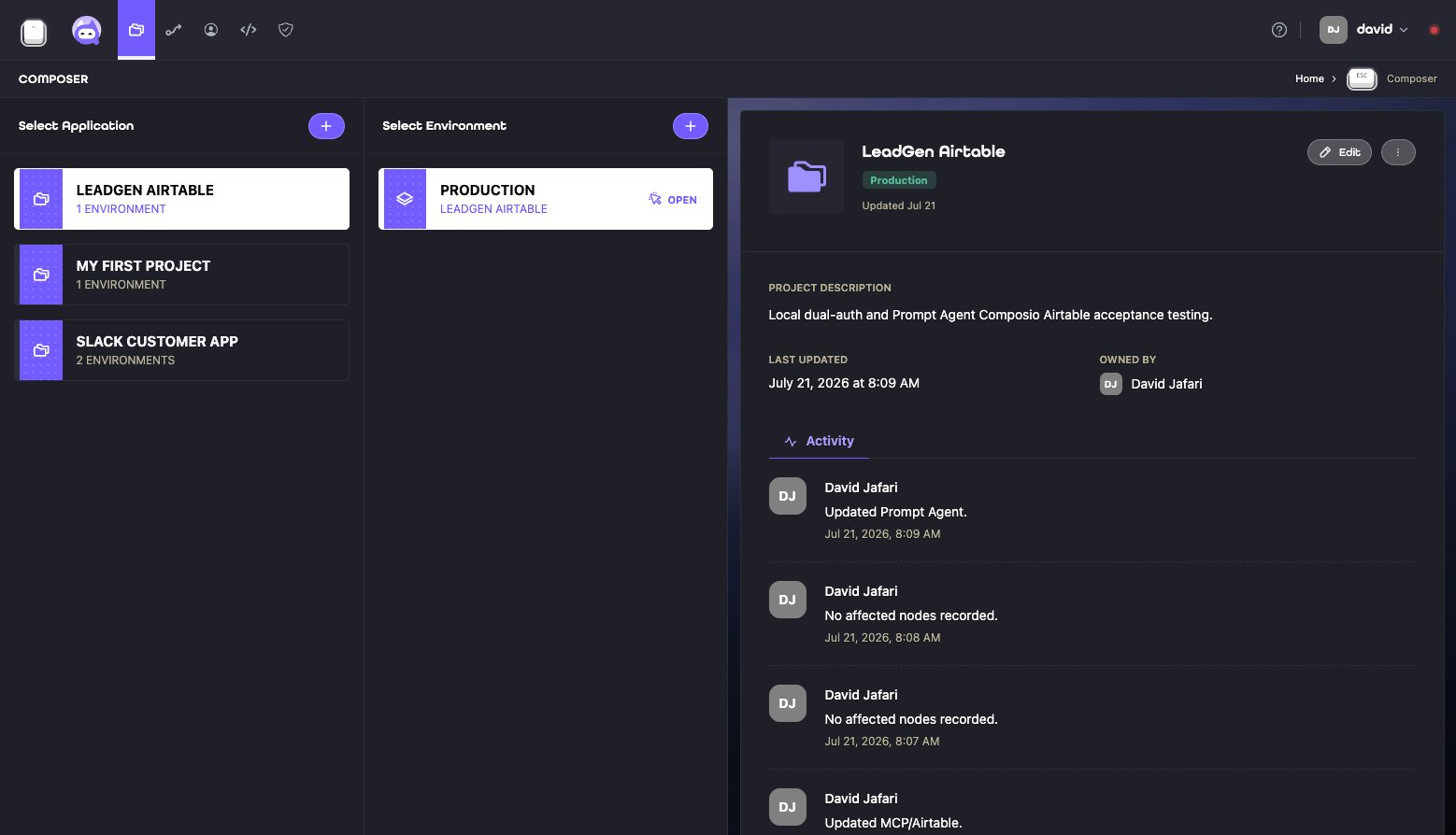
On the Composer start screen, choose a Project under Select Application, then choose the Project environment you want to edit under Select Environment. Use the+ actions to create either one when needed, then select Open.
2. Add Ions to the graph
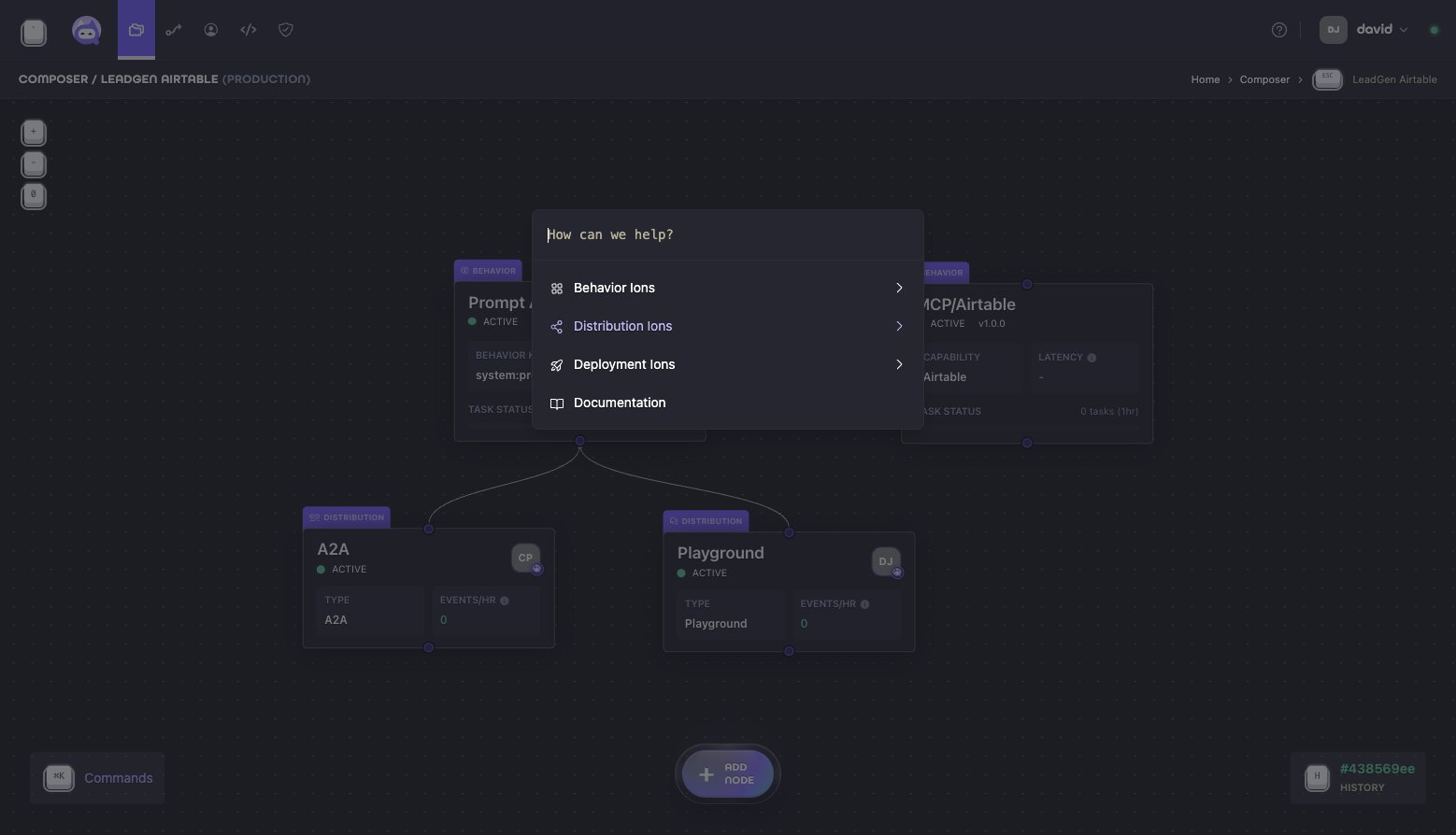
Select Add Node, then choose the type of Ion you want to add:- Add a Deployment Ion to bring a runnable implementation into the Project.
- Add a Behavior Ion to interpret, transform, route, or answer requests.
- Add a Distribution Ion to receive requests from a network or endpoint.
3. Connect a Sequence
Connect a Distribution Ion to the Behavior Ions that should participate in its runtime flow. Those connections form a Sequence: the ordered list of Ions used when work enters through that Distribution.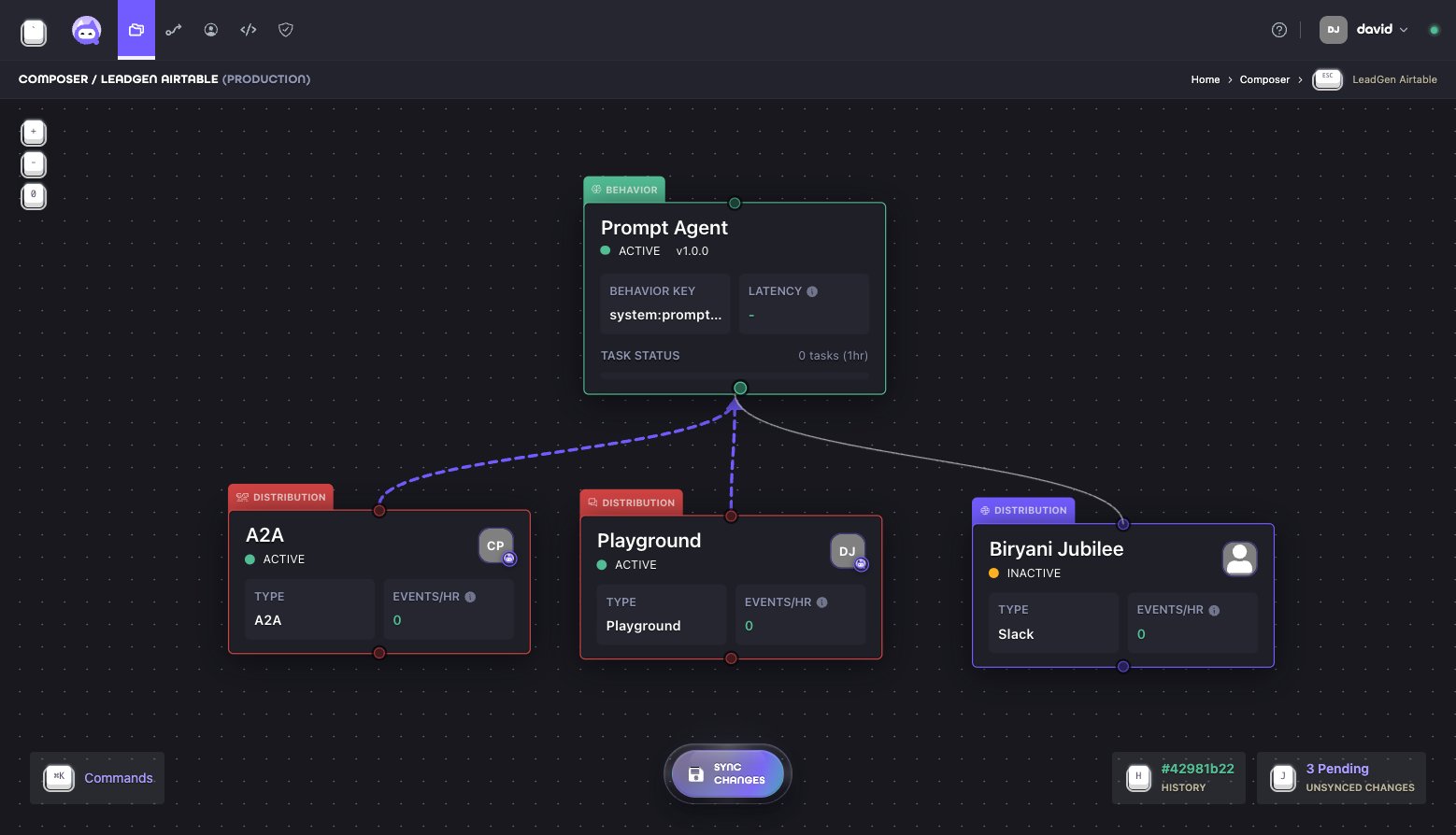
4. Configure each Ion
Select an Ion to open its details panel. The available tabs and fields depend on the Ion type. For example, a Distribution Ion provides network settings and an Identity tab for the records used by that endpoint.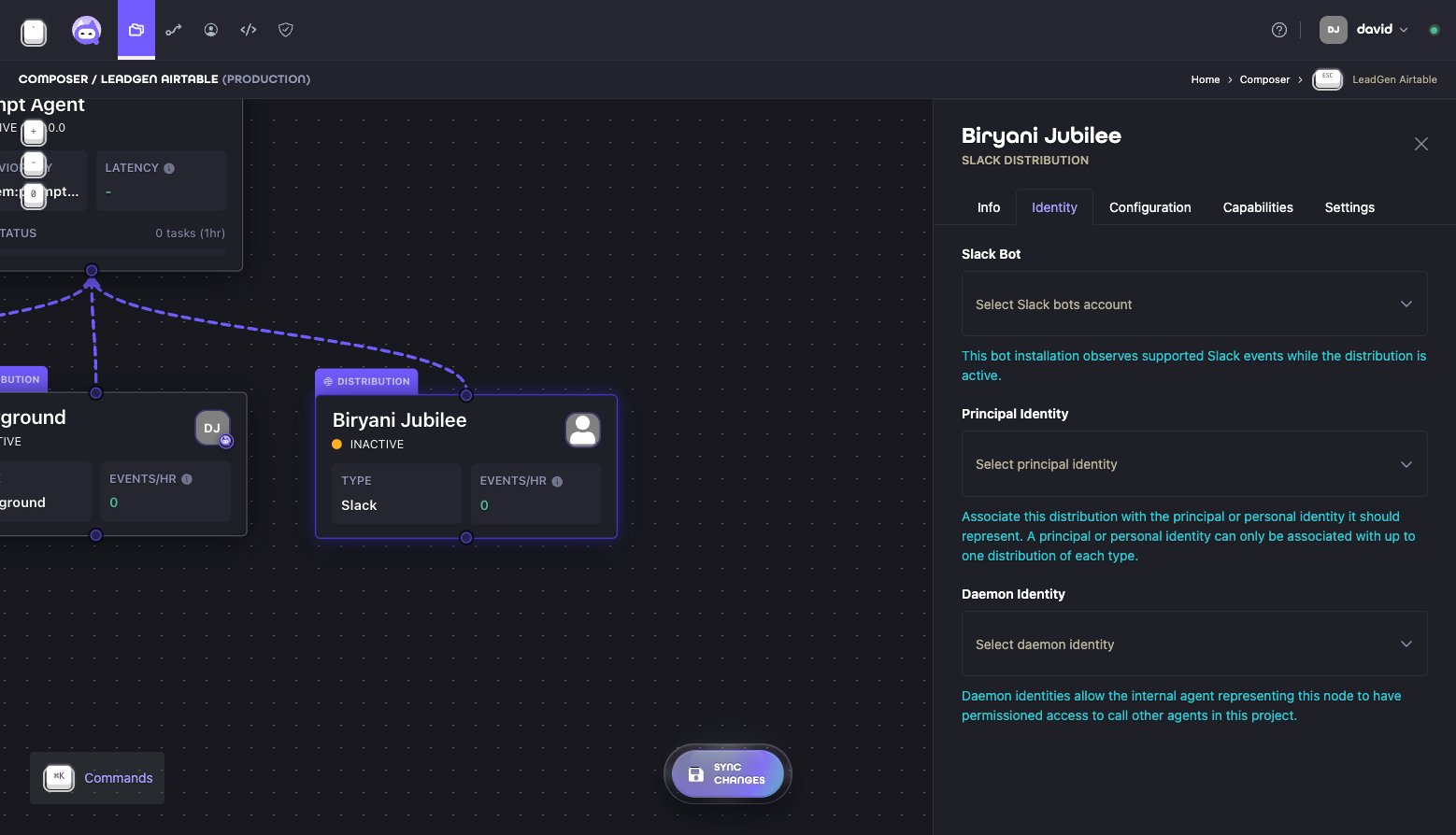
- the network account field, such as Slack Bot, to choose the external account that authenticates the endpoint
- Principal Identity to choose the Aion Identity represented by the Distribution
- Daemon Identity when the configured runtime needs a principal for internal calls, permissions, and usage attribution
5. Review and sync the Project
Before syncing, review the canvas, resolve any validation issues, and confirm that you are editing the intended Project environment. Composer shows the number of pending edits beside History and above Sync Changes.